

ADVOCACY update | PAG NEWS
At the August CTPF Investment Committee meeting, I came prepared with a simple question that I believe every member, retiree, educator, and beneficiary deserves to hear answered clearly:
How do we measure success?
For PAG, one of the most important ways to evaluate the health of a pension fund is the funded ratio. This measure helps us understand whether the Fund’s assets are sufficient to meet earned benefits for current and future retirees.
That may sound technical, but it is not abstract. A healthy pension fund supports retirement security. It also strengthens Chicago Public Schools’ ability to recruit and retain talented educators. When a pension fund is strong, members can have greater confidence that the benefits they earned through years of service will be there when they need them.
At the meeting, I asked CTPF trustees and leadership why the funded ratio has not improved more significantly and what factors are preventing greater progress.
These are not questions asked to criticize for the sake of criticizing. They are questions rooted in accountability.
CTPF exists to protect earned benefits for educators, retirees, and beneficiaries. Trustees serve as the governing body and fiduciaries of that system. Their responsibility is to make decisions that protect the long-term health of the Fund and the interests of all members.
The Dedicated Tax Levy Question
At the Investment Committee meeting, I also raised questions about dedicated tax levy funds intended for CTPF.
The tax levy is not just another revenue stream. It is a dedicated source of deferred compensation, paid through taxpayers’ property taxes, and intended to support the retirement benefits earned by educators.
PAG understands that dedicated tax levy revenues intended for the Fund were not provided to CTPF for many years. We also understand that recent efforts helped secure the release of those revenues.
That led me to ask two direct questions:
- How much money has CTPF received from the dedicated tax levy that was recently released?
- How has that money been allocated, and what impact is it expected to have on the Fund’s long-term financial position
When money owed to the Fund is delayed, redirected, or released after years of concern, members should be told what was received, how it is being used, and how it affects the Fund’s financial position. That is basic transparency and responsible stewardship.
Why the Investment Consultant Decision Matters
There was one action item on the Investment Committee agenda: the selection of an investment consultant. The vote ended in a deadlock, and the discussion was tabled until the September Investment Committee meeting.
That matters.
An investment consultant does not control the Fund, but the consultant plays an important advisory role. CTPF describes independent investment consultants as fiduciaries and advisers selected by the Board of Trustees to provide expert advice, counsel, and support related to the Fund’s investment program. CTPF currently lists Callan as its investment consultant, with a contract expiration of June 30, 2026.
For that reason, the consultant decision is not just a vendor decision. It is a governance decision.
If the same consultant has advised the Fund for many years, members deserve to know how performance is being evaluated, what questions are being asked, and why trustees believe continuing or changing course is in the best interests of the Fund. CTPF’s investment procurement page states that the 2021 Investment Consultant RFP was awarded to Callan Associates.
PAG is especially concerned that the Fund’s funded ratio has not improved more significantly. If trustees are considering retaining the incumbent consultant, they should explain how that decision is being weighed against the Fund’s long-term financial position.
PAG is also watching how broader public policy goals may intersect with CTPF investment discussions, including Chicago-based community development and affordable housing-related strategies. A Callan memorandum to the CTPF Board described a proposed Chicago Community Development Strategy, stating that CTPF staff and Callan were proposing targeted Chicago-based real estate investments. The memo referenced objectives including total return, diversification, and increasing the stock of affordable housing in Chicago. It also stated that Callan suggested investing up to $50 million in the strategy as soon as practical, following CTPF policies and procedures.
Let me be clear: I believe in strong communities. I believe people deserve safe and stable housing. But CTPF assets are not a political checking account. They are retirement assets earned by educators.
If affordable housing or community development investments are being considered, trustees should clearly explain the expected risks, returns, liquidity, diversification, decision-making process, and impact on the Fund’s long-term financial position. Any investment strategy, whether traditional or community-focused, must be evaluated first and foremost by whether it serves the best interests of CTPF members, retirees, and beneficiaries.
My involvement with 39th Ward Neighbors United, a community-driven organization in Chicago’s 39th Ward focused on racial, social, and economic justice, has reinforced the same concern: when public money or pension assets are involved, people deserve transparency about who is paying, who benefits, and how decisions are being made.
Health Insurance Is Part of the Same Retirement Security Conversation
During the Health Insurance Committee meeting later that day, Trustee Nelson asked what my comments had to do with health insurance.
My answer was simple: health insurance is part of the same retirement security conversation.
For PAG, protecting educators and retirees means looking at the whole picture. We must repeal Tier 2, and we must also renegotiate health insurance in a way that serves both active members and retirees.
These issues may appear separate on an agenda, but they are connected in members’ lives. Pension benefits, retiree health insurance, investment performance, funding, and governance all affect whether educators can retire with dignity and security.
That is why trustees need complete, accurate, and timely information before making decisions that affect CTPF members.
That should not be controversial.
At that meeting, I said it was time for new ideas. I still believe that.
Property Tax Timing and the Recent CTPF Resolution
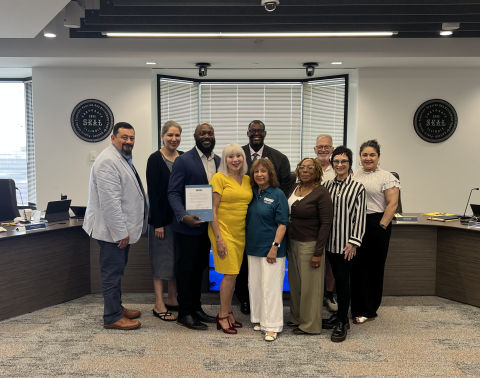
CTPF trustees recently adopted a resolution urging Cook County to include CPS in the Property Tax Bridge Fund and address delays in property tax distributions owed to CPS and CTPF. Photo/source: Chicago Teachers’ Pension Fund.
These questions also connect to a recent resolution adopted by the CTPF Board of Trustees regarding Cook County property tax delays.
On July 27, 2026, CTPF announced that its Board had adopted a resolution calling on Cook County to include Chicago Public Schools in the Cook County Property Tax Bridge Fund and to ensure the timely collection and distribution of property tax revenues owed to CPS and CTPF. CTPF stated that delays in receiving property tax levy revenues can affect the Fund’s ability to invest assets in a timely manner on behalf of members and beneficiaries.
The Cook County Property Tax Bridge Fund is designed to help local governments manage cash-flow gaps caused by delayed property tax distributions. Cook County says the expanded program makes up to $300 million in no-interest loans available to eligible taxing districts.
Cook County announced in June that the next round of property tax bills would be delayed by approximately two months and that the County intended to reopen and expand the Bridge Fund to help schools, libraries, parks, fire districts, municipalities, and other local governments manage the resulting cash-flow gap.
CTPF’s resolution calls for three main actions: include CPS in the Cook County Property Tax Bridge Fund, ensure the timely collection and distribution of property tax revenues owed to CPS and CTPF, and evaluate potential losses and legal remedies associated with delayed distributions.
For CTPF, delayed distributions matter because timing affects how efficiently the Fund can put money to work on behalf of Chicago educators, retirees, and beneficiaries.
CTPF also stated that Cook County planned to distribute approximately $72 million in first-installment property tax revenues to CPS, an action the County said was intended to provide immediate access to available revenues while maintaining support for other taxing districts that rely on the Bridge Fund.
PAG’s position is clear: revenues dedicated to CTPF should go directly and appropriately to CTPF, not to CPS. When pension revenues are delayed, diverted, or routed away from their intended destination, retirement savings are effectively siphoned away from the Fund. The consequences are visible in CTPF’s funded ratio.
The Bottom Line
PAG is watching the full picture.
The funded ratio, dedicated tax levy, property tax timing, investment consultant decision, health insurance, trustee governance, and Tier 2 all affect the same larger question: whether CTPF is being protected for the educators, retirees, and beneficiaries who depend on it.
PAG continues to believe that Tier 2 remains one of the most serious pension issues facing newer educators. Tier 2 creates unequal membership within the same pension system and leaves newer educators with a less protective path to retirement security. Repealing Tier 2 and restoring equal membership is one of PAG’s central priorities.
At the same time, we cannot ignore the funding, investment, health insurance, and governance issues that affect the strength of the pension system as a whole.
The questions I asked at the August meetings come from the same place:
- How do we measure success?
- Why has the funded ratio not improved more significantly?
- How much dedicated tax levy revenue has CTPF received, and how has it been allocated?
- How are investment consultant decisions being evaluated?
- How will health insurance be protected for active members and retirees?
- And how will trustees ensure that every decision serves CTPF members first?
These are reasonable questions. Members deserve reasonable answers.
PAG will continue to ask those questions, not because the work is easy, but because earned benefits are worth protecting.
With gratitude and a little righteous impatience,
Tina