

COMMunity update | PAG News
I spent three hours on a blue canoe built for one, with Phuong, while she fished and I sat quietly in the middle of a small lake.
I love water. I love to play on it. But mostly, I love to be in it.
Muskego Lake was very clean in the middle, but I still wasn’t able to get in the water for several reasons. The most obvious was that I was sharing a one-person canoe with Phuong, a cooler, and fishing gear. I certainly didn’t want to jump out and then try to climb back into that canoe.
A Quiet Moment on Muskego Lake
Still, being out on that beautiful lake, surrounded by nature that I rarely experience so closely, was an adventure. My imagination drifted to the jungles of Vietnam, where Phuong is from.
Most of the time, I wasn’t looking out across the lake. Instead, I found myself looking in, reflective, and around me. I was surrounded by water lilies and tall grasses, immersed in a world that felt both peaceful and alive.
Remembering Students Who Were Left Behind
I had the privilege of serving as the homeroom teacher for newly arrived students from Vietnam. Phuong attended Clemente High School and was a student in my first homeroom class. Her brother was among the Vietnamese children who had been left behind after the Vietnam War.
In 1988, the United States passed the Amerasian Homecoming Act, which allowed Vietnamese children born to American fathers, along with their close family members, to immigrate to the United States with refugee benefits. For many families, including Phuong’s, the act provided opportunities that had previously seemed impossible.
While sitting in that canoe, I thought about what happens when people are left behind. Phuong’s family experienced it after the Vietnam War. Today, we face a different challenge. Illinois is leaving a generation of teachers behind through Tier 2.
These reflections were especially timely as PAG held its Annual Board Meeting on July 22, a gathering that allowed us to reflect on our mission and the work ahead.
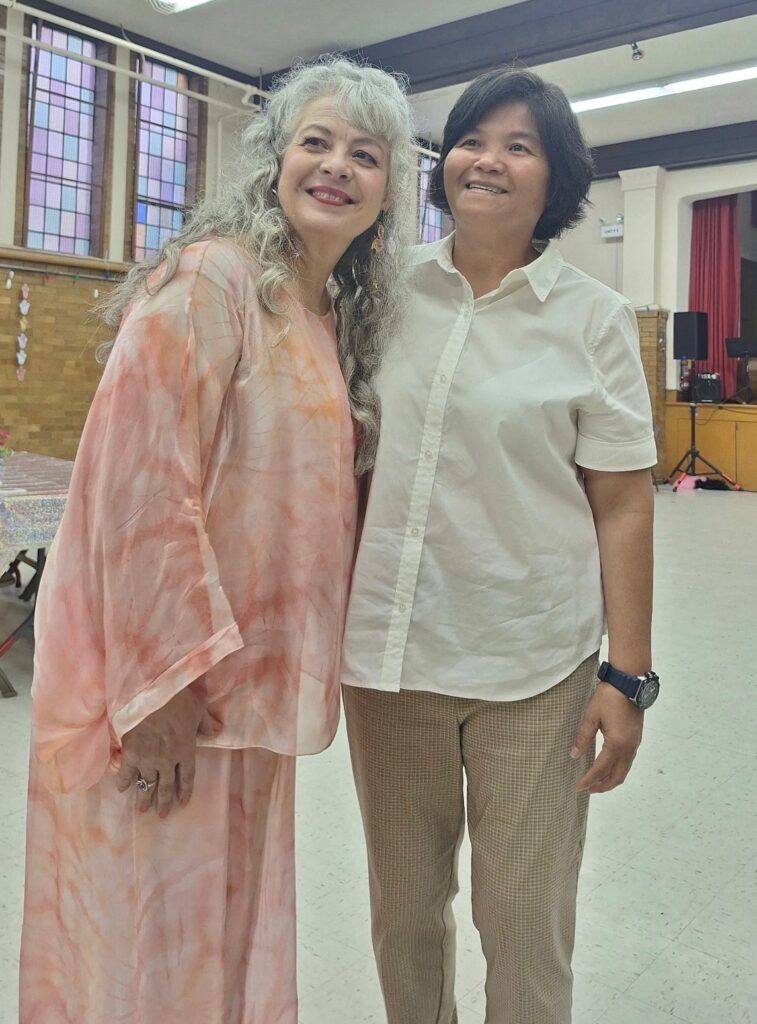
Featured above: Tina and Phuong at PAG’s Senior Prom 2026 summer fundraiser.
PAG’s Annual Board Meeting
We held our Annual Board Meeting on July 22, which has become a tradition in honor of Helen Ramirez Odell, who was both a friend and a mentor to me and PAG.
I want to share a few updates:
- We have evolved into a consumer advocacy group.
- We remain committed to focusing on CTPF and still hold true to our mission and 501(c)(3) regulations.
- Our first three pillars — Educate, Protect, Restore — still stand.
- The fourth pillar is Consumer Advocacy.
Our Fourth Pillar: Consumer Advocacy
We are committed to developing a more educated consumer base in institutional financial literacy. This means fostering stronger financial understanding among consumers.
Just as the Amerasian Homecoming Act sought to correct a wrong and restore opportunity to families who had been left behind, PAG believes it is time to correct the mistakes of Tier 2.
We cannot afford to leave a new generation of teachers behind, because when we do, our children are ultimately the ones who pay the price.
With love, reflection, and resolve,
Tina